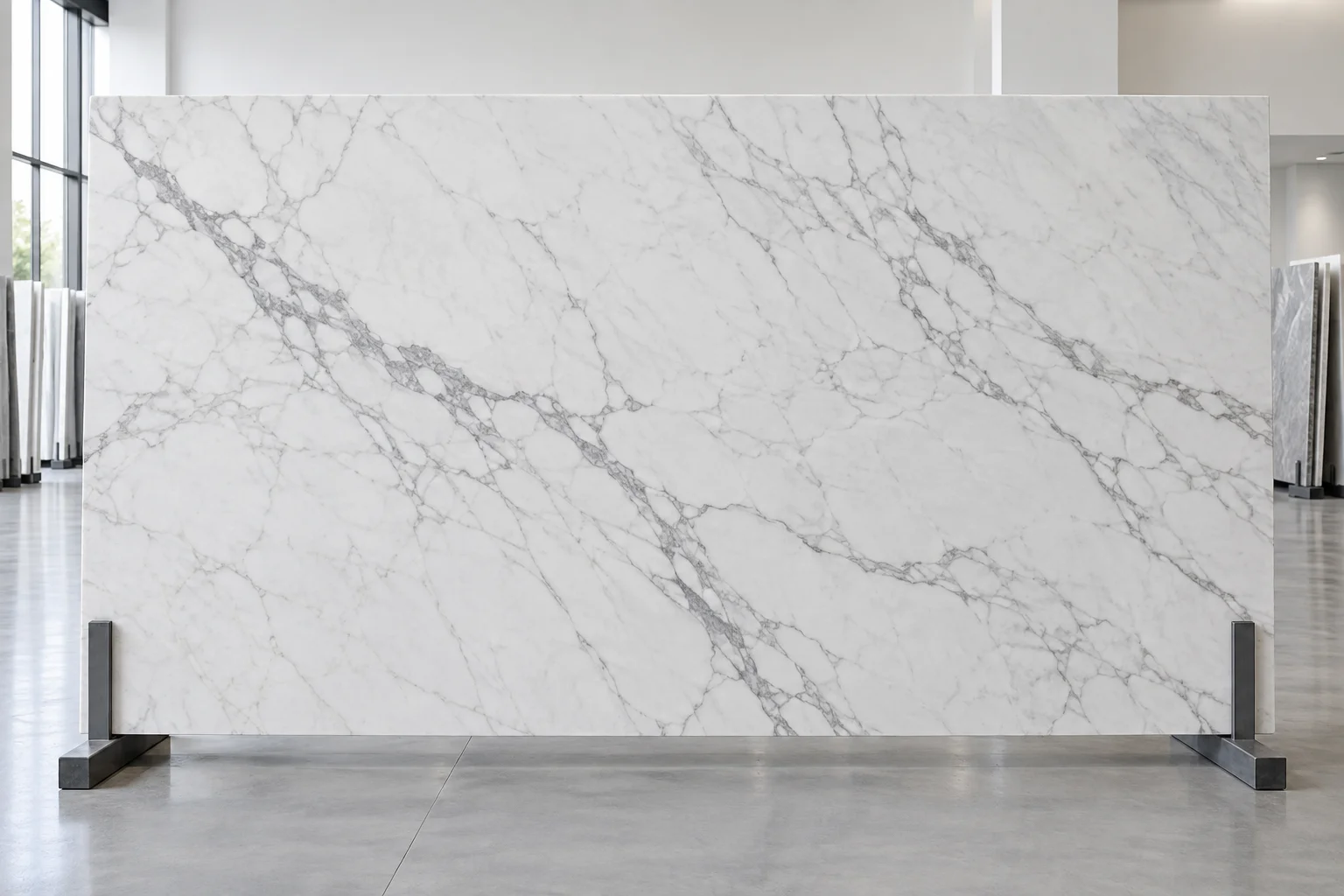
Quick summary
Marble suits projects that accept acid-sensitive surfaces and changing patina. Genuine quartzite is harder, but the trade name alone cannot establish identity or performance. Compare the actual lots, maintenance expectations and fabrication scope before choosing.
Key takeaways
- Separate material identity from the commercial stone name.
- Approve a finish sample and an identified lot together.
- Compare installed scope and usable yield, not only price per square metre.
At a glance
| Decision | Marble | Natural quartzite |
|---|---|---|
| Identity | Usually carbonate-rich; confirm the selection. | Quartz-rich metamorphic stone; verify the trade label. |
| Acid exposure | Acids can etch the surface; sealing does not prevent this. | True quartzite is more acid resistant; mixed minerals and treatments need review. |
| Wear | Surface patina and scratches may be part of the accepted appearance. | Harder mineral structure; still assess edges, fissures and fabrication. |
| Selection | Review vein range and the chosen finish. | Review mineral structure, treatments and lot-specific evidence. |
| Quotation | Request lot, yield, finish and edge scope. | Request the same scope; harder stone does not imply an identical processing cost. |
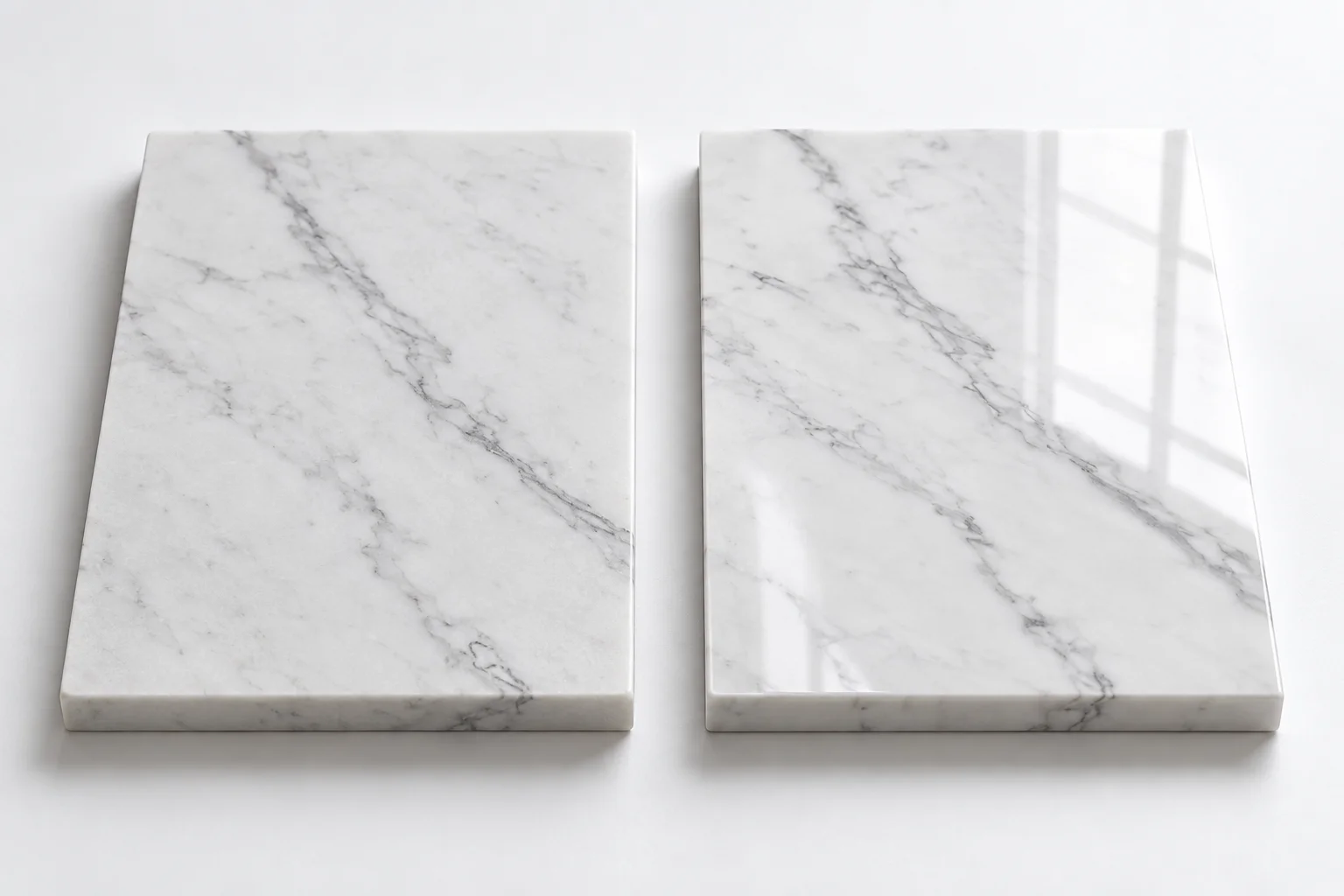
FORMVEIN / Original buyer worksheet
Two-lot approval worksheet
- Identify both lots
- Compare evidence and scope
- Record open questions
- Approve one reference
A practical record for the selection meeting. Fill it with actual lot and sample evidence; unresolved fields remain on hold.
Illustrative workflow. No laboratory results or completed-project claims.
Choose the surface, then the stone
A reception wall and a working kitchen island place different demands on a material. Start with exposure to food, moisture, cleaning products and wear. Then decide which appearance and maintenance expectations the project can accommodate.
Marble and acids
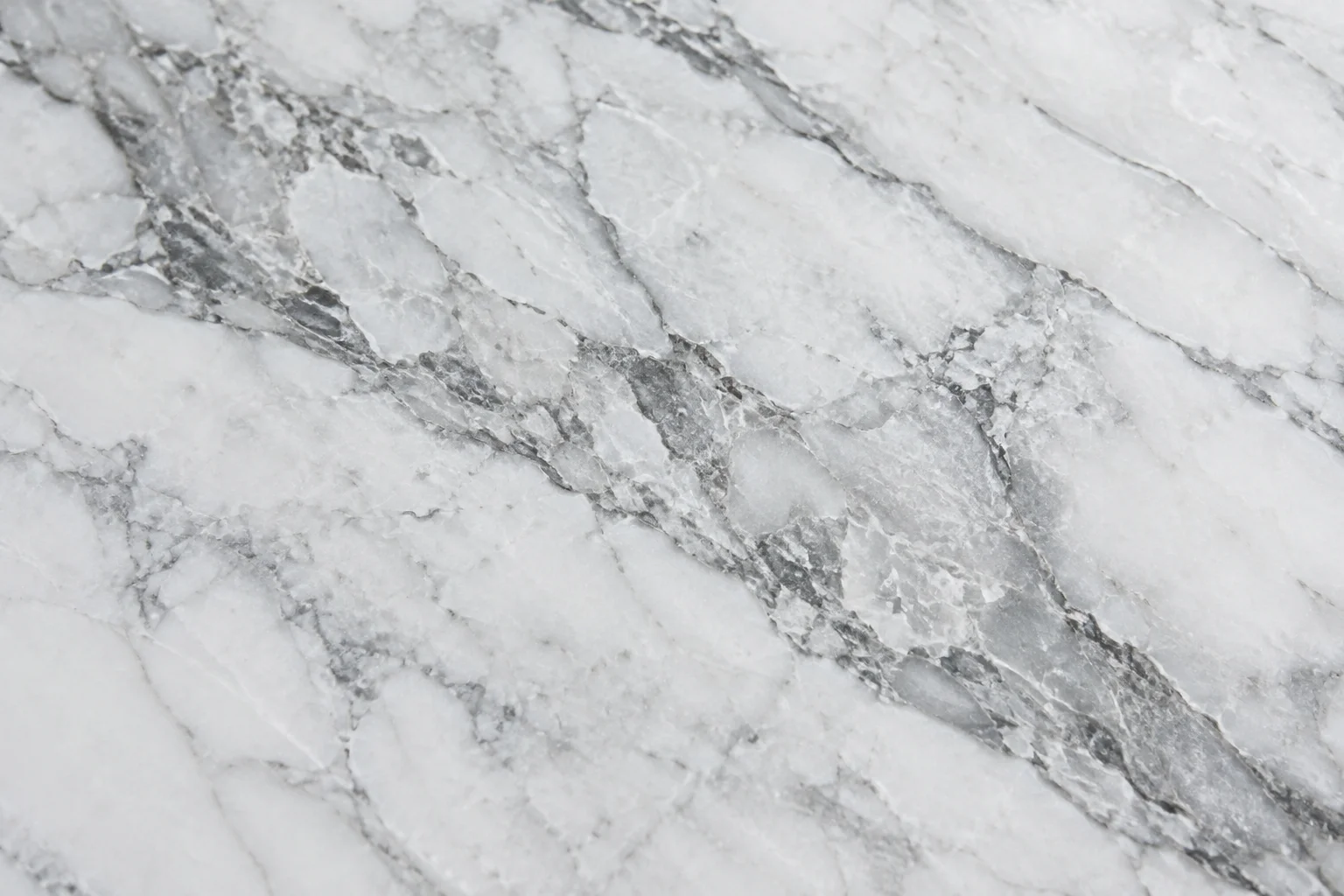
Marble can etch when exposed to acids. Etching is a change to the surface, not simply a stain. A sealer should not be treated as protection against acid etching. Review a finish sample and explain likely surface changes to the end client before approval. Review the marble supply page alongside your intended use.
Verify the quartzite
Natural quartzite and engineered quartz are different materials. Some stones sold under quartzite trade names are not geological quartzite. Request material identification and discuss a representative sample with the fabricator; do not choose on the name alone. The quartzite material page sets out the information to discuss for a specific selection.
Compare actual selections
Ask for the same information for both candidates: full-slab photographs, thickness, finish, repairs or treatment, and any relevant testing. Include fabrication feasibility, usable yield and maintenance expectations in the comparison. Use the slab buying checklist to compare actual lots on the same basis.
Make the approval specific
Approve an identified lot and a physical finish sample. Keep that approval with the quotation and drawings, so procurement, fabrication and the design team are working from the same reference. For a multi-area building, the hotel stone procurement guide explains how to carry that selection across rooms and production batches.
Apply the comparison to the project
For a hotel reception wall, start with composition, lighting and joint positions. For a working kitchen island, discuss acids, cleaning and expected wear with the end user before selecting the stone. A bathroom vanity needs a separate review of splash exposure, products used and edge details.
If the brief calls for marble, ask for marble slab supply. For finished panels or tops, use custom stone fabrication to define the drawing and processing scope.
A practical selection sequence
Shortlist two actual lots. Ask for the same photographs and sample finish, record unresolved performance questions, and compare a cutting layout against the largest piece. Confirm thickness and surface finish before completing the RFQ.
Two quotes, one comparable brief
A lower slab price cannot settle the material choice when one quote includes finished edges and the other stops at raw slabs. Send the same drawing revision, piece quantities and destination to both suppliers. Ask each to list the work included and the questions still open.
For an island, include the top and any returns separately. A built-up edge is a fabrication detail, not evidence that the whole slab has that thickness. Ask the fabricator to identify seam positions, cutouts, backing or reinforcement, and support responsibilities before comparing totals.
- Record the proposed lot and the actual slab dimensions, rather than only the commercial name.
- Keep raw slab area, finished piece area and the proposed layout separate; do not assume a universal waste percentage.
- Request itemised fabrication, packing and delivery scope with explicit exclusions.
- Treat any substitution of lot, finish or construction as a new approval.
A worked selection meeting
Illustrative scenario: a designer is choosing stone for a kitchen island used for food preparation. Candidate A is sold as marble; Candidate B is sold as quartzite. Neither has a confirmed lot or sample reference yet. The useful next step is to request evidence for both, rather than declare B approved from its name.
Record the client’s acceptance or rejection of visible etching and wear. If that appearance is unacceptable, keep the marble option on hold. For the quartzite candidate, resolve identity and care guidance with the supplier and a competent stone professional. Next, check both proposed lots against the cutting drawing. A visually preferred slab that cannot accommodate the agreed pieces is not ready for purchase.
This example is an original planning exercise, not a FORMVEIN order, performance test or installation case study.
When to stop and request evidence
Hold the affected selection if the supplier cannot identify the lot, the photographs omit important areas, or the finish sample comes from a different material. Where identification remains disputed, request suitable professional assessment or testing. Photos and trade names alone cannot resolve mineral composition.
Do not perform destructive tests on a customer’s finished stone. Any sample assessment should be agreed with its owner and interpreted within its limits. Structural supports, floor suitability and project-specific compliance remain separate design decisions.
Use the two-lot approval worksheet
Download the two-lot approval worksheet. It keeps the evidence, decision owner and unresolved questions beside each candidate. Carry the selected reference into your RFQ, then browse Products or ask about the proposed lot.
Frequently asked questions
Is quartzite the same as engineered quartz?
No. Natural quartzite is quarried stone; engineered quartz is a manufactured composite. Name the intended material explicitly in the specification.
Can a sealer make marble acid proof?
No. Sealing and acid etching address different issues. Agree care expectations before choosing marble for food or drink service.
Which is cheaper for a project?
There is no reliable universal ranking. Compare identified lots, finished quantities, cutting layouts, processing, packing and delivery on the same basis.
Is quartzite always the lower-maintenance choice?
Verified quartzite generally resists everyday kitchen acids better than marble, but porosity, treatments and care still need to be checked for the actual selection. Do not promise stain-proof or maintenance-free performance.
Can I approve a stone from a photograph?
A photo helps shortlist appearance. Lot identity, representative physical samples, finish approval and the required project evidence are still needed before purchase.
References & sources
Industry references support the material notes; procurement steps are FORMVEIN’s editorial guidance. Sources reviewed 18 September 2026.
From specification to quotation
Turn the decision into a brief.
Confirm your supply format: marble slabs or custom stone fabrication. Record the material, finish, thickness, dimensions and destination.