What you are buying
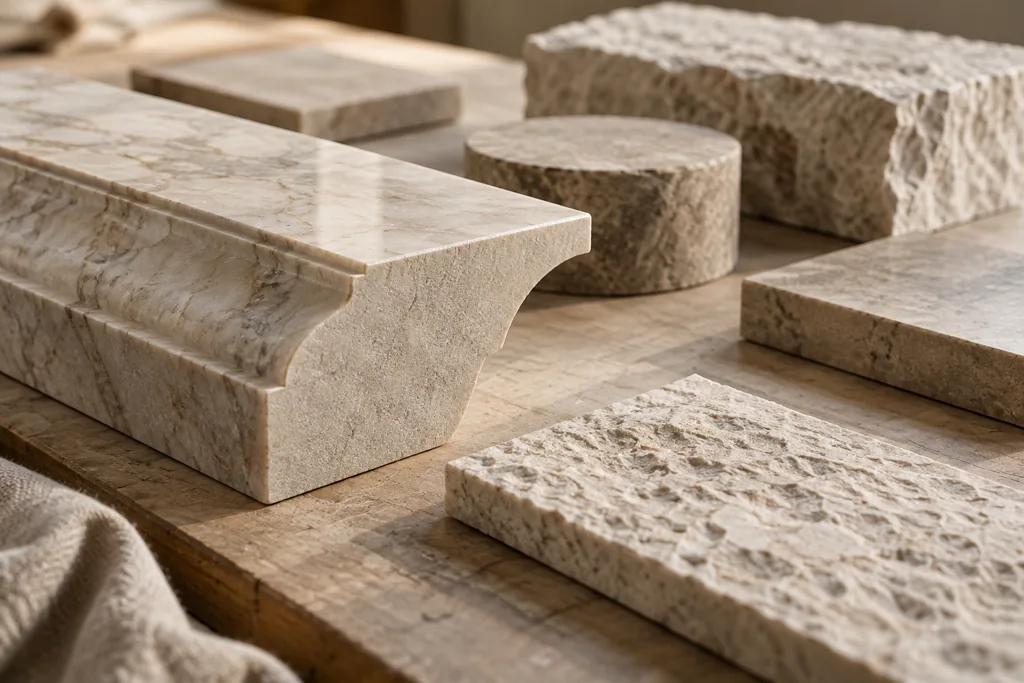
Cut-to-size natural stone is supplied as pieces cut to agreed dimensions for a particular use. The order may include floor tiles, wall panels, stair treads, vanity tops or shaped architectural components. It is different from buying whole slabs for a local fabricator to cut: more of the dimensional and finishing decisions must be resolved before shipment.
Buying cut-to-size natural stone from China can suit a coordinated room package, repeated dimensions or a custom piece made from drawings. Before comparing prices, decide which work belongs with the supplier and which remains with the installer. Site measurement, support, fixing and final installation details need an assigned owner.
Start with the application and the material
Describe where the pieces will go and what they must withstand. A bathroom floor, a reception wall and a dining tabletop need different reviews of finish, cleaning, moisture exposure and fabrication details. Use the material library to frame the discussion, then confirm the actual stone and lot offered.
Send the largest finished sizes early. Slab dimensions, natural features, cut-outs and vein alignment affect usable yield. A preferred pattern may require a different cutting layout or additional material. For lot-level checks, use the slab buying checklist.
Build an RFQ that can be priced
In practice, the usefulness of a stone quotation depends heavily on the completeness of drawings and finishing details. “Marble panels, honed” leaves the supplier to guess the thickness, edge work, pattern and quantity. Make those assumptions visible before comparing offers.
The cut-to-size RFQ checklist explains how to organise the document package. At minimum, include:
- Material: stone family, preferred selection or reference image, and intended location.
- Dimensions: finished length, width and thickness, with units and a unique ID for each piece.
- Surface and edges: finish, visible faces, edge/profile drawings, cut-outs, holes and any back-face treatment.
- Quantity: count per piece reference, total area where relevant and separately identified spare pieces.
- Pattern: vein direction, bookmatch groups and whether a dry-lay review is required.
- Acceptance: required tolerances and inspection criteria for supplier review, without leaving them implicit.
- Drawings or templates: dated revisions, detail views and the status of site measurements.
- Delivery: packing requirements, destination country and city, site access, target timing and requested transport scope.
Separate sample approval from production approval
A sample helps establish colour, texture, fill and finish. It cannot show every vein in a slab lot. Ask for current lot photographs and a representative range alongside the sample. If an edge or a filled surface is important, confirm that the sample includes it.
Keep a written approval record naming the selected material, finish sample and drawing revision. Resolve missing dimensions before releasing the affected pieces for cutting. If the design changes after approval, request a revised price and schedule rather than assuming the previous quotation still applies. Our fabrication workflow sets out the decisions that must pass from drawing review into production.
Compare the full supply scope
Check our fabrication capabilities against your drawings, then ask the quotation to distinguish material, cutting, profiles, finishing, inspection and packing. Transport should have a named destination and clearly stated responsibilities. Clarify who arranges onward delivery, unloading and any destination-side clearance.
Ask what the proposed lead time starts from: an enquiry, an agreed order, material confirmation or final drawing approval. Where a finish or unusual profile needs a trial, allow for the result to be reviewed before the production sequence is fixed. Confirm feasibility before treating any cutting method as part of the order.
Agree QC before the pieces are packed
Inspection should refer to the approved drawings, sample and acceptance criteria. Agree how dimensions, thickness, visible faces, edges, cut-outs and the piece count will be checked. Natural features, repairs and permitted variation should already be part of the material approval.
For a connected pattern, specify which pieces need dry lay, how the arrangement will be photographed and how IDs will stay attached to that arrangement. A dry-lay photograph is useful for visual approval; it does not replace dimensional checks or an agreed inspection record. Raise discrepancies while the pieces can still be identified and reviewed.
Plan packing around receiving and installation
Ask how faces, edges and corners will be protected, and how pieces will be separated and restrained for transport. The packing proposal should suit the geometry and fragility of the actual order. Confirm crate sizes, weights and handling needs with the receiving team.
Match piece IDs to the packing list and, where practical, the room or installation zone. If one area must be installed first, agree that sequence before packing. Ask which export and material documentation is included, and have the relevant shipping parties confirm destination requirements. Record how shortages or transit damage will be documented and reported.
Errors that are expensive to discover on site
Many avoidable problems begin as missing information in the enquiry. Review the following before approving production:
- Using nominal room dimensions as finished cutting sizes while joints and interfaces remain unresolved.
- Approving a small sample as if it guaranteed an identical colour or vein pattern across the entire lot.
- Leaving exposed edge finishes or vein direction out of the drawings.
- Comparing quotations that cover different packing, inspection or delivery scopes.
- Ordering replacement pieces later without planning for possible batch variation.
Send a brief that shows what must be made
FORMVEIN supplies natural stone and custom fabrication, backed by 30+ years of family experience in stone. Single pieces, small batches and project quantities can be discussed against the material and drawings. Send dimensions, reference images and material requirements, with unresolved details marked clearly. That gives the first quotation review something concrete to work from.